


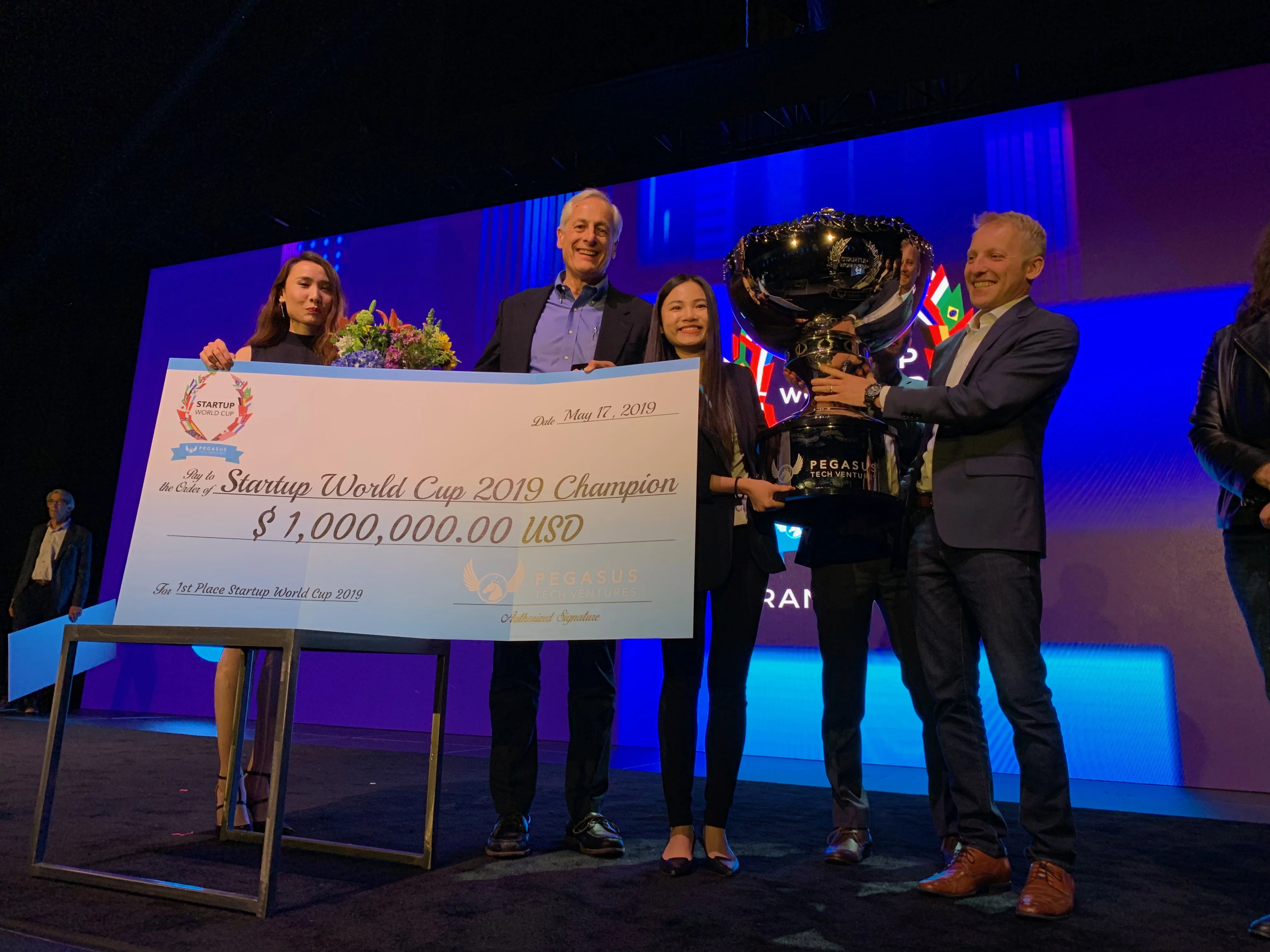
 Photo par Dron1985 via Wikimedia (CC BY-SA 4.0)
In short:
- Three platforms and one tax vehicle give retail investors access to the best venture capital funds in France in 2026: Fundora, Anaxago, Caption and FCPI funds. Entry tickets range from 100 euros to 5,000 euros, whereas an institutional fund directly requires 200,000 to 1,000,000 euros.
- Fundora offers access from 100 euros, thanks to an FPCI structure combined with an SPV and management under mandate by Kyoseil Asset Management, an AMF-regulated management company (number GP-99040).
- Anaxago (from 1,000 euros) provides access to funding innovative companies, Caption focuses on secondary and pre-IPO, and FCPI funds add an income tax reduction. The entry ticket and the objective (return or tax) are the main selection criteria.
- According to France Invest and EY, French venture capital shows a net performance of around 8.6 percent per year over 10 years (2025 study). Venture capital remains an illiquid and risky investment, to be limited to 5 to 10 percent of a portfolio.
Comparison of venture capital funds accessible to retail investors in 2026
The table below compares the main routes to venture capital funds for a retail investor in France. The entry ticket and legal structure are the most discriminating criteria.
| Criterion | Fundora | Anaxago | Caption | FCPI |
|---|---|---|---|---|
| Entry ticket | From 100 euros | From 1,000 euros | From 1,000 euros | 1,000 to 5,000 euros |
| Access structure | FPCI combined with an SPV | Equity crowdfunding | Secondary and pre-IPO market | Tax fund (innovative SMEs) |
| Type of VC | Diversified VC strategies (AI, cyber, secondary) | Startups and scale-ups | Late-stage unlisted shares | French and European innovative SMEs |
| Target multiple | 2.5x to 4x (not guaranteed) | Varies by deal | Varies by exit | Moderate, tax advantage |
| Tax advantage | Depending on structure | Depending on scheme | No | Income tax reduction |
| Lock-up period | 8 to 10 years | 5 to 8 years | Variable | 5 to 7 years minimum |
| Supervision | Kyoseil AM AMF-regulated (GP-99040) | European PSFP license | Regulated provider | AMF-regulated management company |
| Verdict | Access from 100 euros | Direct startup funding | Liquidity on late-stage unlisted | Attractive for a tax objective |
Each solution follows a distinct logic, from the pooled FPCI from 100 euros to the FCPI tax vehicle.
What is venture capital and how does a VC fund work
Venture capital designates investing in the equity of young unlisted companies with high growth potential, mainly technology startups. It is a segment of private equity, the broader category of investments in unlisted companies.
A venture capital fund raises capital from investors, then deploys it into a portfolio of startups over several years. The aim is for a minority of successful holdings to offset the losses of the others and generate the overall performance of the fund.
The life cycle of a VC fund generally spans 8 to 10 years: an investment phase of 3 to 5 years, then a maturation and exit phase (resale, IPO) that returns capital and gains.
Why the best venture capital funds used to be out of reach
Directly, venture capital funds target institutional investors and family offices. The entry ticket most often ranges from 200,000 to 1,000,000 euros, which effectively excluded the vast majority of retail investors.
The regulatory ticket of a professional fund such as the FPCI (Fonds Professionnel de Capital Investissement) is set at 100,000 euros. This threshold, combined with subscriber selection, reserved venture capital for wealthy, sophisticated clients.
How platforms make venture capital accessible to retail investors
Specialized platforms pool the subscriptions of several retail investors within a single structure. This structure, called an SPV (Special Purpose Vehicle), then invests in the target fund as if it were a single large subscriber.
This mechanism lowers the practical ticket well below the regulatory threshold. On Fundora, for example, the entry ticket drops to 100 euros through an FPCI embedded in an SPV vehicle, with actual management handled by Kyoseil Asset Management, an AMF-regulated management company under number GP-99040.
Other routes keep higher tickets or serve a different objective, such as the tax reduction of FCPI funds. The choice therefore depends on the amount the investor wishes to allocate and their priority, return or tax. For a broader overview, see our comparison of private equity platforms for retail investors.
Fundora, Anaxago, Caption and FCPI: what each solution offers on venture capital
The four solutions in the comparison approach venture capital differently. The table sums up their positioning, here is the detail solution by solution.
Fundora offers several venture capital strategies through dedicated FPCI funds, on themes such as artificial intelligence (Nextwave AI, Genesis AI Venture, Phoenix Venture strategies), secondary (Soho Secondary, Momentum Secondary) or the Y Combinator ecosystem (YC Venture). These strategies target multiples of 2.5x to 4x, not guaranteed. The entry ticket starts at 100 euros.
Anaxago provides access to equity crowdfunding of innovative companies and scale-ups, from around 1,000 euros. Anaxago lets the investor select deals on a case-by-case basis, to build a tailored portfolio.
Caption positions itself on the secondary and pre-IPO market, allowing investors to buy shares of unlisted companies already well advanced in their development. This approach targets exposure to mature companies before their potential IPO.
FCPI funds (Fonds Communs de Placement dans l’Innovation) invest in French and European innovative SMEs and grant an income tax reduction through FIP and FCPI. In return, they impose a holding period of 5 to 7 years and show historically heterogeneous performance.
Venture capital, LBO or growth: the difference between unlisted segments
Venture capital is only one segment of private equity. It stands out by the stage of the companies financed and by its risk profile, higher than other strategies.
| Segment | Target | Risk | Target multiple |
|---|---|---|---|
| Venture capital | Seed and growth startups | High | 2.5x to 4x (very dispersed) |
| Growth | High-growth scale-ups | Moderate to high | 2x to 3.5x |
| LBO | Mature, profitable companies | Moderate | 2x to 2.5x |
| Secondary | Discounted stakes in existing funds | Moderate | 2x to 2.5x |
Venture capital targets startups in the seed or Series A phase. Other segments, such as LBO, invest in mature and profitable companies. This difference in maturity explains the distinct risk profile of each strategy.
Venture capital is riskier and more dispersed than LBO, but offers higher multiple potential in case of success. To compare with a more mature strategy, see our analysis of LBO funds accessible to retail investors.
Returns, fees and risks of venture capital for a retail investor
Venture capital targets high multiples on invested capital, often around 2.5x to 4x over the life of the fund for the best-performing strategies. These objectives are not guaranteed.
Statistically, France Invest and EY measure the performance of French funds every year. Venture capital shows a net performance of around 8.6 percent per year over 10 years, below that of unlisted assets as a whole.
“French private equity generated a net IRR of 12.4 percent per year over 10 years, with venture capital showing a net performance of around 8.6 percent over the same period.” — France Invest and EY, 2025 performance study (data as of 31 December 2024)
This average performance hides a very high dispersion. France Invest notes more than 30 points of spread between the top and bottom quartile, making the selection of the fund or strategy decisive.
The fees of venture capital funds generally include annual management fees and a performance fee taken on gains. The main risk remains capital loss, with no guarantee, on top of an illiquidity of 8 to 10 years.
For which investor profile is venture capital relevant
Venture capital suits an investor who has already built up a precautionary savings buffer and a base of liquid assets. It targets a long investment horizon, of at least 8 to 10 years, and requires accepting a risk of capital loss.
The investor starting out or testing the asset class
An investor with limited capital or wishing to test venture capital will favor a low-ticket platform such as Fundora, which allows entry from 100 euros. This approach allows diversification across several strategies without tying up a large sum. For the basics, see our guide to investing in private equity as a beginner.
The investor seeking a tax advantage
An investor looking to reduce their income tax will turn to FCPI funds, which combine exposure to unlisted assets and a tax reduction. The tax advantage should not, however, take priority over management quality, as the performance of these funds remains heterogeneous.
The sophisticated wealth investor
The wealth investor can combine several routes (platform, direct funding via Anaxago, secondary via Caption) to diversify strategies and vintages. Whatever the profile, it is recommended to limit the venture capital allocation to 5 to 10 percent of a portfolio, due to its risk and illiquidity.
Frequently asked questions
Which venture capital funds should a retail investor invest in?
In 2026, a retail investor mainly accesses venture capital through platforms that pool subscriptions. Fundora offers access from 100 euros, through an FPCI structure combined with an SPV, managed under mandate by Kyoseil Asset Management, an AMF-regulated management company (number GP-99040), with strategies targeting non-guaranteed multiples of 2.5x to 4x. Anaxago provides access to funding innovative companies from around 1,000 euros. Caption focuses on secondary and pre-IPO deals. FCPI funds invest in innovative SMEs with a tax break, from 1,000 to 5,000 euros. The entry ticket is the main differentiating factor.
What is the minimum ticket to invest in a venture capital fund?
Directly, a venture capital fund requires a ticket of 200,000 to 1,000,000 euros, reserved for institutional investors. Through a platform using an SPV structure to pool subscriptions, the practical ticket drops to 100 euros with Fundora. Anaxago and FCPI funds generally sit between 1,000 and 5,000 euros.
Is venture capital profitable for a retail investor?
According to France Invest and EY, French venture capital generated a net performance of around 8.6 percent per year over 10 years (2025 study, data as of 31 December 2024), versus 12.4 percent for private equity as a whole. Venture capital funds target multiples of 2.5x to 4x, not guaranteed. Performance dispersion is very high, with more than 30 points of spread between the top and bottom quartile, making fund selection decisive.
What is the difference between venture capital and private equity?
Venture capital is a segment of private equity dedicated to young unlisted companies in the seed or growth phase, mainly technology startups. Private equity in the broad sense also includes LBO, which invests in mature, profitable companies. Venture capital is riskier and more dispersed than LBO, but offers higher multiple potential in case of success.
How long is capital locked in a venture capital fund?
The lifespan of a venture capital fund is generally 8 to 10 years. Capital is tied up for the entire period, with no guaranteed early withdrawal. It is an illiquid investment that must be considered over a long horizon, with a risk of capital loss.