



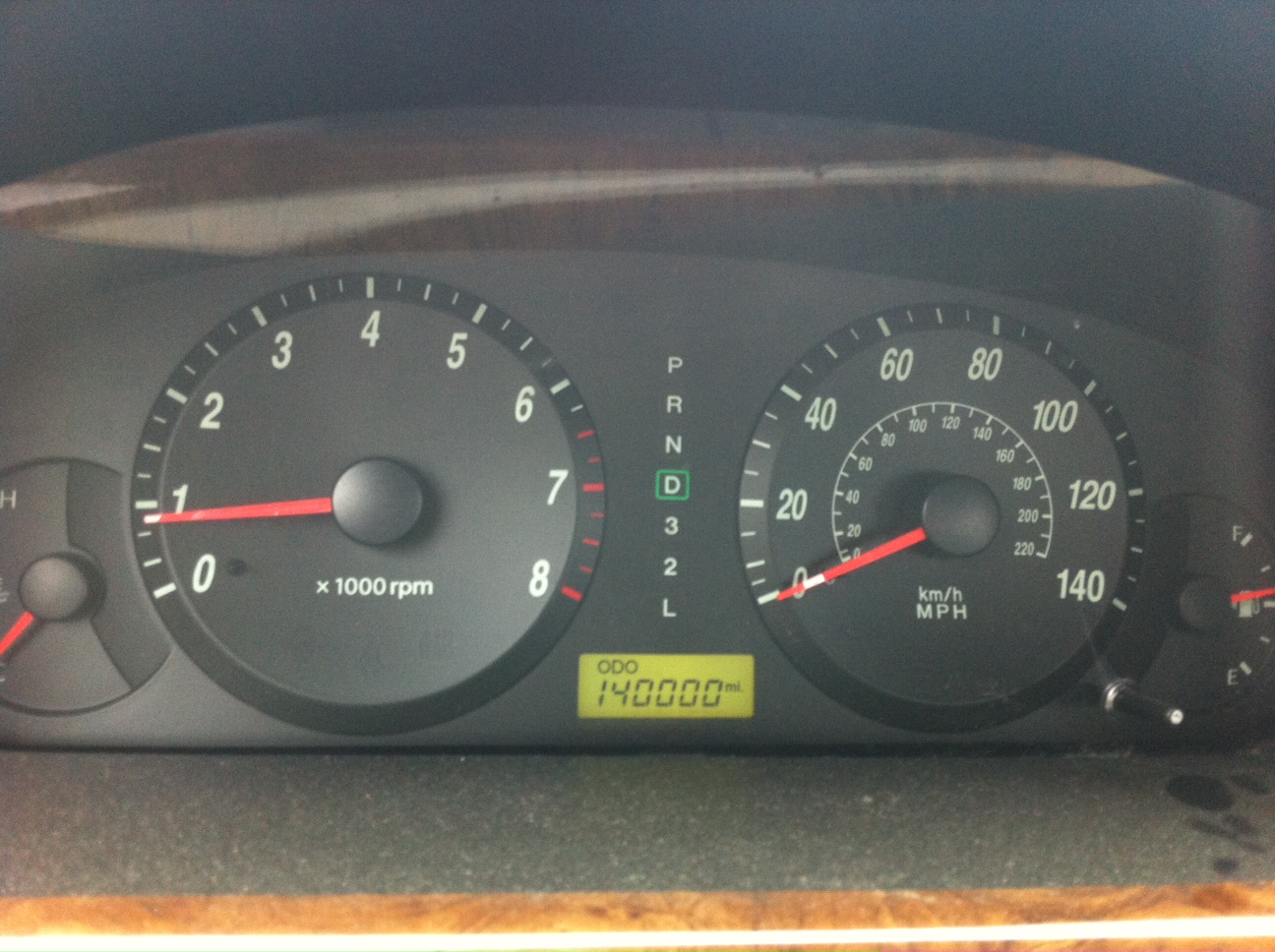
 Photo by ParentingPatch via Wikimedia (CC BY-SA 3.0)
Quick summary:
- Pay-per-km car insurance offers savings of 20 to 45 per cent for drivers covering less than 8,000 km per year, according to the French Insurance Federation.
- The main offers in 2026 include Sogessur (Societe Generale group), Direct Assurance YouDrive, Allianz Conduire, MAIF VAM, Wilov and Altima Pay How You Drive, with annual rates starting between 180 and 350 euros for a third-party policy.
- The choice between mileage package and pay-per-mile depends on the driving profile: package for steady consumption, pay-per-mile for very low or erratic use.
- Above 10,000 km per year, free-mileage insurance becomes more advantageous, the saving linked to pay-as-you-drive disappearing with the mileage surcharge.
2026 comparison table of pay-per-km car insurance
| Insurer | Model | Annual rate (third-party, 5,000 km) | Mileage covered | Tracking method | Verdict |
|---|---|---|---|---|---|
| Sogessur (Societe Generale) | Modulated package | around 280 euros | 5,000 to 12,000 km | Declarative + check | Balanced rate, full guarantees |
| Direct Assurance YouDrive | Pay-per-mile | around 250 euros | Actual | Mobile app | 100 per cent connected |
| Allianz Conduire | Modulated package | around 290 euros | 5,000 to 10,000 km | Device or app | Wide branch network |
| MAIF VAM | Modulated package | around 270 euros | 4,000 to 12,000 km | Declarative | Mutualist, associated services |
| Wilov | Pay-per-day | around 220 euros | Actual | Mobile app | Ideal for urban low mileage drivers |
| Altima Pay How You Drive | Package + driving score | around 240 euros | 5,000 to 12,000 km | Mobile app | Behaviour bonus |
Rates shown are for a reference profile (35 years old, urban, 5,000 km/year, petrol vehicle, 0.50 bonus). Actual rates vary by profile (age, place of residence, vehicle, driving licence seniority, history).
Pay-per-km car insurance: a product for low-mileage drivers
Pay-per-km car insurance, sometimes referred to as “pay-as-you-drive” or “pay-per-mile”, is a type of insurance whose premium depends on the number of kilometres driven in the year. This product developed in France from the 2010s and now covers around 1.5 million active contracts according to the French Insurance Federation (FFA), or around 4 per cent of the insured fleet.
Pay-as-you-drive responds to an evolution in the French car fleet. Drivers cover on average 11,600 km per year according to the SDES (2024 data), but 35 per cent of them drive less than 8,000 km per year. For these profiles, pay-per-km car insurance offers substantial savings compared to classic free-mileage formulas.
The two main models
Two mechanisms coexist on the market:
- Mileage package: at subscription, the insured chooses a package (5,000, 8,000, 10,000 or 12,000 km), with a fixed annual premium. In case of overrun, a mileage surcharge applies (0.03 to 0.08 euro per km). It is the dominant model in France
- Pure pay-per-mile: the premium includes a fixed monthly part and a variable part based on actual km, measured via a connected device or a mobile app. Rarer in France, this model is carried by Direct Assurance YouDrive and Wilov
Sogessur and pay-per-km car insurance in 2026
Sogessur, the insurance subsidiary of the Societe Generale group, offers a pay-per-km car insurance product integrated into its non-life portfolio. The company claims around 2.5 million customers in France according to the group’s 2025 activity report, including a growing share on mileage-based formulas.
Key features
- Packages offered: 5,000, 8,000, 10,000 and 12,000 annual km, with possible adjustment during the year
- Rate: from around 280 euros per year for a third-party policy (5,000 km, reference profile), with a competitive scale for 0.50 bonuses
- Guarantees: available in third-party, extended third-party (theft, fire, glass) and comprehensive, with 0 km assistance and replacement vehicle as options
- Mileage tracking: declarative method (odometer photo at subscription, during the year and at renewal), with occasional check by the insurer
- Distribution: online subscription on the Societe Generale website, in group branches, or by phone
The Sogessur offer fits into a bancassurance logic: subscription is facilitated for existing Societe Generale customers, sometimes with discounts associated with the domiciliation of direct debits on the current account. After-sales service is integrated into the branch network, which facilitates the management of claims and amendments.
Detailed comparative analysis
Real savings by profile
For a reference profile (35 years old, urban, petrol vehicle category 5, bonus 0.50), the gaps are as follows:
- 3,000 km/year: 35 to 45 per cent savings vs free-mileage insurance
- 5,000 km/year: 25 to 35 per cent savings vs free-mileage insurance
- 8,000 km/year: 15 to 22 per cent savings vs free-mileage insurance
- 10,000 km/year: 5 to 12 per cent savings vs free-mileage insurance
- 12,000 km/year: equivalence or slight loss depending on contracts
Above 12,000 annual km, pay-as-you-drive loses its financial interest, except in the framework of a very specific driving score offer (Altima Pay How You Drive, Allianz Conduire) which can compensate with a behaviour bonus.
“Pay-as-you-drive has experienced sustained growth since 2020, driven by the rise of teleworking and the reduction of home-to-work commutes. The French market is expected to exceed 2 million contracts by 2027, or around 6 per cent of the insured fleet.” — Florence Lustman, Chair of the French Insurance Federation, FFA annual conference 2025
Guarantees and caps
All pay-per-km insurers offer the same levels of guarantees as classic formulas:
- Third-party: civil liability only
- Extended third-party: third-party + theft, fire, glass, natural events
- Comprehensive: full coverage including damage to the vehicle
Compensation caps, deductibles and exclusions are comparable between classic and pay-per-km formulas within the same insurer. The main difference lies in the premium, adjusted to mileage. Options (replacement vehicle, secondary driver, young driver) are identical.
Use cases: who is it for?
Urban teleworker
The urban teleworker (partial or full) is the ideal beneficiary of pay-per-km car insurance. With a typical mileage of 3,000 to 6,000 km per year, savings often reach 30 to 40 per cent compared to a classic formula. Sogessur, Direct Assurance YouDrive and Wilov are particularly suited to this profile. Wilov stands out with its pay-per-day model (payment only on days when the car is used), ideal for very occasional use.
Retiree with limited use
For retirees with use limited to 4,000 or 5,000 km per year (shopping, outings, family visits), the mileage packages of Sogessur, MAIF and Allianz offer an excellent price/guarantees ratio. The declarative method is generally preferred to the mobile app, more cumbersome to install.
Household with a second car
The second vehicle of a household is often a use case suited to pay-per-km insurance. Generally used for short trips (shopping, school, weekend), it frequently covers less than 5,000 km per year. Switching from a classic to a pay-per-km policy can then generate 200 to 400 euros of annual savings. An overall review of the insurance budget can be coupled with an optimisation of protection insurance or borrower insurance delegation.
Profiles to avoid
Pay-per-km car insurance is not recommended for:
- Drivers covering more than 12,000 km per year (loss of pricing advantage)
- Sales staff and itinerant professions (mileage hard to predict)
- Young drivers with high malus (surcharges still apply)
How to choose: criteria to check
Tracking method
The declarative method (odometer photo) is the simplest and least intrusive. It suits stable and predictable profiles. Direct Assurance YouDrive and Wilov use a mobile app for precise mileage tracking. Check the privacy policy and data retention durations.
Caps and surcharges
The rate announced at subscription is valid within the package limit. It is necessary to check:
- The number of km in the package
- The rate per additional km (between 0.03 and 0.08 euro depending on insurers)
- The possibility of increasing the package during the year (and at what cost)
- The reimbursement rules in case of under-consumption (rarely applied)
Mistakes to avoid
- Underestimating annual mileage: choosing too low a package triggers surcharges for each additional km. Better to plan a 10 to 15 per cent safety margin.
- Neglecting guarantees: focusing only on the rate misses unfavourable exclusions or caps.
- Confusing package and pay-per-mile: the two models have different pricing logics. Pay-per-mile is more advantageous below 4,000 km, the package above.
- Forgetting the annual commitment: most contracts are terminable at renewal or via the Hamon law after one year. Compare termination conditions before subscribing.
Frequently asked questions
Which pay-per-km car insurance to choose in France in 2026?
The choice of a pay-per-km car insurance depends on annual mileage and driving profile. For less than 5,000 km per year, Wilov and Altima Pay How You Drive are among the most competitive offers. Between 5,000 and 8,000 km, Sogessur (Societe Generale group), Direct Assurance YouDrive and Allianz Conduire offer savings of 20 to 30 per cent compared to a classic policy. Above 10,000 km, pay-as-you-drive becomes less advantageous than a free-mileage insurance. MAIF also offers adjustable options for low-mileage drivers.
How does pay-per-km car insurance work?
Pay-per-km car insurance adjusts the premium according to the number of kilometres driven in the year. Two models exist: (1) the mileage package (5,000, 8,000, 12,000 km), with a fixed premium and a surcharge in case of overrun, generally between 0.03 and 0.08 euro per additional km; (2) pure pay-per-mile, with a fixed monthly part and a variable part based on actual mileage, measured via a connected device or a mobile app. The main offers are Sogessur, Direct Assurance YouDrive, Allianz Conduire, Wilov, MAIF, Altima.
Is pay-per-km car insurance worthwhile for a low-mileage driver?
Yes, pay-per-km car insurance offers significant savings for a low-mileage driver. According to the French Insurance Federation, a driver covering 5,000 km per year can save between 25 and 45 per cent compared to a classic policy by opting for a mileage package. Savings are maximal below 7,000 annual km. Urban dwellers, retirees, teleworkers and households with a second car are the first beneficiaries.
What are the drawbacks of pay-per-km car insurance?
Pay-per-km car insurance has three main limitations. First, exceeding the mileage package triggers additional fees (0.03 to 0.08 euro per km on average). Second, the connected device or mobile app raises questions of confidentiality of driving data (speed, braking, timings). Third, the offer is less competitive above 10,000 km per year and guarantees may be more limited than on a classic comprehensive policy.
How is mileage tracked in pay-per-km car insurance?
Mileage tracking uses three methods. The declarative method relies on the annual sending by the insured of a photo of their odometer, with occasional checks by the insurer. The connected method uses an OBD device plugged into the vehicle’s diagnostic port, transmitting driving data in real time. The mobile app method detects trips via the smartphone GPS. Direct Assurance YouDrive and Wilov use the app, Allianz and Sogessur offer the three methods depending on the formulas.